
Best Travel Website Book Hotels, Flights, Trains, Bus and Cabs with upto 50% off
The most interesting of the garden's three levels is the large lower section (where avocados and mangos grow). The text of her book is on the Gardenvisit website and the section which describes Pinjore Garden is quoted from in the below video. The garden features an impressive range of flora including aromatic flowering plants, Mango orchards, shrubs, and other trees.
WHY VISIT Yadavindra Garden?
The terrace also has a small zoo, with animals such as deer, rabbits, peacocks, and parrots. The palace also has a museum, displaying artifacts and relics from the Mughal and the Patiala periods. The gate leads to a long water channel, flanked by cypress trees and flower beds.
Category:Yadavindra Gardens
The garden’s design reflects the classic Charbagh style, characterized by its Yadavindra Gardens symmetrical layout, terraced lawns, waterways, and majestic structures. Pinjore Garden is a quintessential example of Mughal garden design, characterized by its symmetrical layout, terraced lawns, cascading fountains, and intricate water channels. Spanning over 100 acres, these beautifully manicured gardens are renowned for their Mughal-style architecture, intricate terraced layouts, and vibrant floral displays.
It was a good place to go with your whole family.I would prefer going at this place in the evening as it would have beautiful fountains with vibrant colours. Food over here is expensive so it is better to bring it from outside and enjoy your beautiful time. In recent times, it has been renamed as Yadavindra Garden in his memory. The Maharaja Yadavindra Singh ( ) of the princely state of Patiala restored the garden to its former splendour. It is an examples of the Mughal Gardens architectural style, which was renovated by the Patiala Dynasty Sikh Rulers. Following is a list of other nature attractions found within few kilometers of Yadavindra Gardens.
- At present, the garden is undergoing a conservation process and various beautification projects are in progress.
- The garden stretches over a massive area of 100 acres and is a beautiful place to unwind with nature amid the ever-growing concrete city.
- It is an instance of the Mughal Gardens style, and changed into constructed via way of means of Patiala Dynasty Rulers.The lawn is withinside the village of Pinjore lie 22 km from Chandigarh at the Ambala-Shimla avenue.
- The garden has various types of boats, such as paddle boats, row boats, and motor boats, that can be rented for a nominal fee.
- Click on the links below to follow Yadavindra Gardens on various social media platforms.
- During the visit to the Pinjore garden, one may also taste the local Haryanvi food.
Visitors can explore the intricately decorated interiors of these palaces and marvel at the exquisite craftsmanship. As mentioned earlier, the Shish Mahal and Rang Mahal are two of the most striking structures in the garden. Additional charges may apply for special events or exhibitions held within the garden premises.
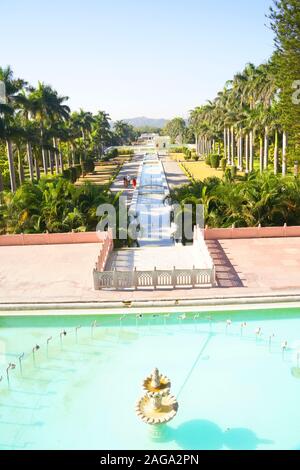
This terrace is also known as the Shish Mahal (Glass Palace), as it has a palace with glass windows and mirrors, reflecting the beauty of the garden. Have you ever wondered what it would be like to visit a Mughal palace and garden? Pinjore garden is a fine example of terrace-gardening in India and serves as the venue of the annual Mango festival during Baisakhi. The garden is beautifully illuminated, and various cultural programs are organized, making it a vibrant and festive experience for visitors. This festival celebrates the rich cultural heritage of Pinjore and showcases traditional music, dance, crafts, and cuisine.
Pinjore Garden is open to visitors throughout the year, offering a unique experience in every season. After India gained independence in 1947, the garden came under the jurisdiction of the Haryana government. However, it was later revived by the rulers of the Patiala State, who recognized its historical and cultural significance. The garden has undergone several phases of restoration and renovation over the centuries, preserving its historical integrity while adapting to modern needs.
The garden also boasts of a variety of flora and fauna, including exotic plants, flowers, birds, and animals. He also added some modern amenities and attractions to the garden, such as a zoo, a nursery, and a museum. The most notable among them was Maharaja Yadavindra Singh, who gave the garden its current name, after his own. It was later restored and renovated by the rulers of the Patiala Dynasty, who acquired the garden in the 19th century. However, after the decline of the Mughal Empire, the garden was neglected and damaged by the invaders and the elements. Yadvinder Garden was originally built by Fidai Khan, a general of Aurangzeb, the sixth Mughal emperor, in the 17th century.
There are numerous pools of water, impressive arched balconies, and lush green manicured laws carpeted with beautiful and fragrant flower beds. As the name suggests, this festival exhibits the best mangoes from every state in India. One of the best places to visit in Chandigarh, Pinjore is a treat for those who wish to explore India’s north. It features traditional Japanese elements such as stone lanterns, bridges, and koi ponds, offering a tranquil escape from the hustle and bustle of the main garden.
These celebrations bring the garden to life with music, colors, food, and traditional charm, making it a must-visit destination for locals and tourists alike. Pinjore Garden isn’t just a visual delight—it’s also a vibrant cultural hub that hosts a variety of meals, events, and festivals throughout the year. The annual mango festival is an added attraction for visitors.